2024 – Current

IBM

Research - Sr. UX Designer

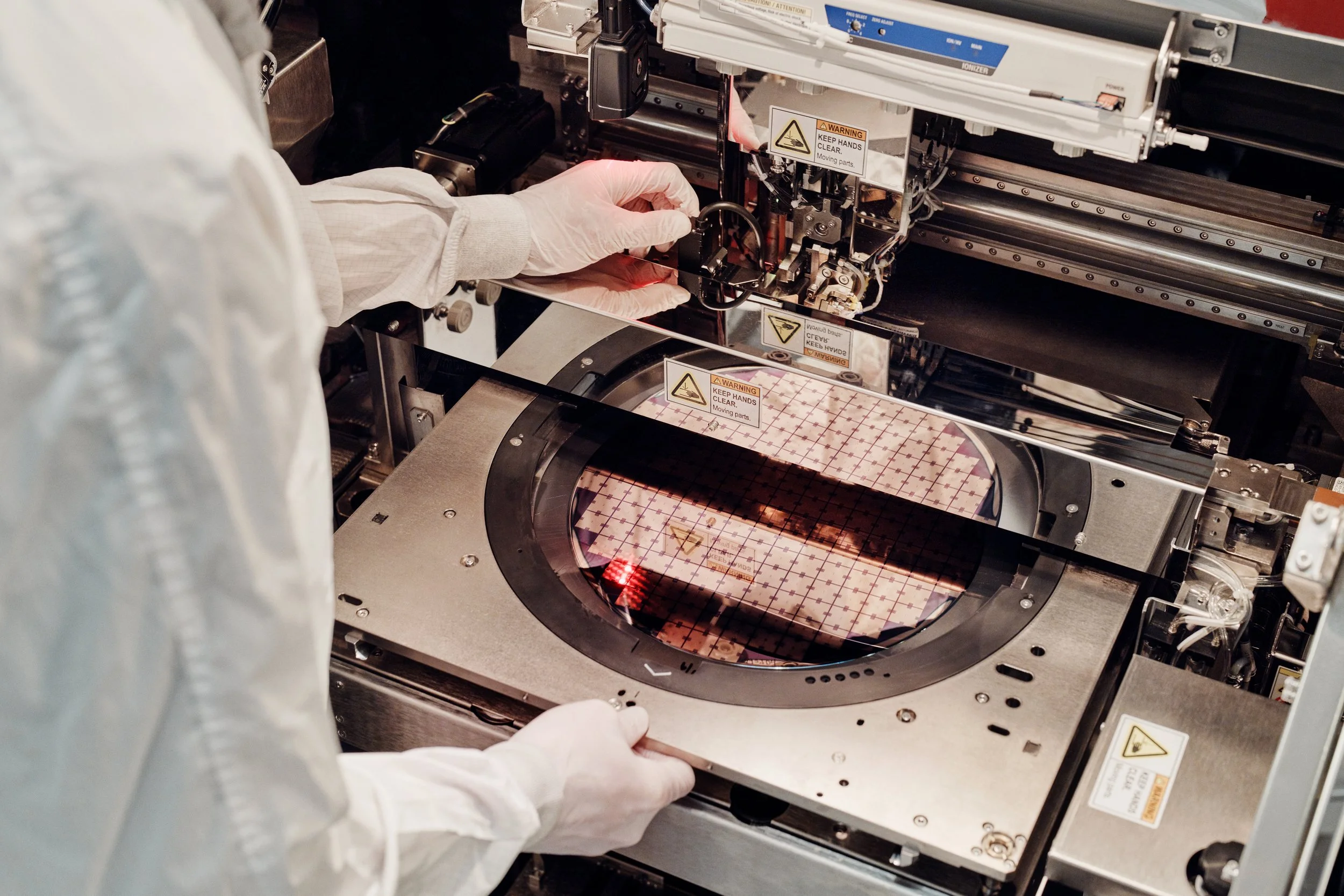
At IBM Research I am Directly responsible for leading the end-to-end design execution for design, testing and data analysis tools to aid IBM and Rapidus Corp. semiconductor groups in the development and building of advanced chiplet technology.

Graph Modeling for Portfolio Risk Management at Leading International Bank

Overview

Increasing competition and pace of technological advancements are requiring the banking and financial markets to innovate risk management practices. A leading Japanese bank, wished to explore how they might innovate their risk management and portfolio loan risk assessment processes with first-of-a-kind graph modeling of industry inter-dependencies, supply chains, and subsequent loan portfolio risk concentration.

Hi-fidelity wireframe of risk management data visualization UI.

Solution

We partnered with IBM Research to build out capabilities for ingesting, storing, processing, and displaying publicly available NAIC codes and graph the relationships of this supply chain data. An interface was developed that allowed Risk Management stakeholders to explore these graphs and run calculations to gain additional granularity on insights measuring risk.

Outcomes

Reduced operational risk by identifying portfolio risk concentrations.

Greater insight into the relationships between industries’ supply chains and individual company data.

Simplified processes for calculating and managing risk.

Effortless RFP Evaluation with Generative AI for U.S. Industrial Equipment Distributor

Background

One of the largest industrial equipment distributors in the United States,was seeking ways to enhance the efficiency of their Requests for Proposals (RFP) summarization process. Leveraging Watson X from IBM's Watsonx.ai, the objective was to automate the summarization of solicitation documents and empower the client team to query these documents, thereby streamlining the review process.

Challenges

The current process involved meticulous manual reading and summarization of each line in the RFP, leading to a highly labor-intensive evaluation. Additionally, the client had to compile lists of questions, create compliance matrices, and write proposals, all of which were time-consuming tasks.

Solution

The solution involved harnessing the generative AI capabilities of watsonx.ai to parse public RFPs, generate summaries, and create corresponding question and answer sets. This automated approach replaced the manual effort required for RFP analysis, offering a more efficient and effective means of document assessment.

Outcomes

Automated Summaries: The manual effort previously required for RFP analysis was replaced by automated summaries generated by Watson X.

Enhanced Efficiency: The client could now quickly review solicitation documents and determine whether to consider them, leading to a more streamlined and efficient review process.

Time Savings: The labor-intensive tasks of compiling questions, creating compliance matrices, and writing proposals were alleviated, resulting in substantial time savings.

AI-Powered Solution for Streamlining Telehealth Scheduling

Overview

A prominent U.S. cancer research hospital partnered with IBM to streamline patient scheduling for telehealth appointments. The objective was to enhance the efficiency of care advisors in determining telehealth eligibility for cancer patients, ensuring optimal customer care. The solution involved the development of the Patient Advocate Services (PAS) Chatbot, designed to consolidate information from 14 different sources and serve as a single source of truth for quick and accurate answers related to the scheduling process.

Solution

PAS Chatbot:

Functioning as an internal digital assistant, the PAS Chatbot empowered care advisors to determine telehealth eligibility efficiently. It significantly reduced the time and effort spent by care advisors on searching through multiple documents for scheduling telehealth visits. The chatbot enabled care advisors to inquire about telehealth regulations in specific states, enhancing their decision-making process.

Single Source of Truth Pipeline (SSOT):

The solution implemented a centralized location on the cancer research hospital’s on-premises backend to update documents. The SSOT pipeline ensured care advisors accessed the most up-to-date information, eliminating concerns about version control. This approach drastically reduced the time spent searching for new document versions, contributing to a decrease in scheduling errors related to versioning issues.

Challenges

Patient scheduling presented a labor-intensive process for care advisors. They navigated through 14 different documents/applications to schedule new patients and assess telehealth eligibility across state and insurance coverage. The absence of a centralized location led to difficulties in accessing the most up-to-date information, resulting in version control issues and scheduling errors.